We are the Kentucky. Baptist. Convention.

Hanging in our home are custom picture frames for each member of our family that tell when they were born and the meaning of their name. Guests who study the portraits can quickly become acquainted with “Free & Strong”, “Who is like God?”, “Gift of God” and …. “Helmet Head” (Sorry, Kennedy!).

While it may not be true about my family, the names given to many in the Bible are very important. Their names were often significant and indicated key attributes about the person.

As we approach the annual meeting, I pondered, “What does our name say about the Kentucky Baptist Convention?”

KENTUCKY: We are connected geographically.

Our churches share the common bond of being in Kentucky and being called to reach Kentucky. We are the largest religious group in our state, spanning the entire commonwealth from the Appalachian Mountains in the east to the Jackson Purchase in the west. Our geographical connection isn’t just about sharing a state. It means we understand the diverse needs, varied cultures, and unique challenges encountered across Kentucky. Our shared geographic identity enables us to coordinate efforts to reach every corner of our state with the gospel.

BAPTIST: We are connected theologically.

While there are many churches of various mindsets in our state, what differentiates us is our shared theological conviction. We are united by our core beliefs as expressed in the Baptist Faith and Message, including the authority of the Bible as the infallible Word of God, salvation through Christ alone, the autonomy of the local church, and believers’ baptism by immersion. This shared theological DNA ensures that as we work together, we are aligned in our understanding of God, salvation and the Great Commission. Having a consistent theological framework shapes how we do missions, evangelism and education throughout the state.

CONVENTION: We are connected cooperatively.

The term convention refers to the voluntary cooperation among Kentucky Baptist churches. Unlike hierarchical denominations, Kentucky Baptists are autonomous and not directed by any external authority. Rather, we freely associate with one another for the purpose of fulfilling the Great Commission. This is expressed most tangibly by giving to the Cooperative Program and working collaboratively to launch statewide initiatives, support missionaries, care for foster children, fund collegiate ministry and train future church leaders.

Summary

The Kentucky Baptist Convention is a collection of churches in Kentucky that share a similar Baptist theology and are committed to voluntarily cooperating in ministry through a Convention of churches. Names matter… and “Kentucky Baptist Convention” is one name I am proud of.  

Celebrating the Cooperative Program with Children (includes downloadable lessons!)

Sitting in the front row of a recent church service gave me a direct view of a pastor sharing his weekly children’s message. He immediately captured their attention by distributing currency and sharing that every time a dollar is placed into the church’s offering plate, 20 cents is sent to support missionaries through the Cooperative Program. He personally shared how he and his wife benefited from those gifts while serving as International Mission Board missionaries in South Africa.

Funding missions cooperatively is a hallmark of Southern Baptist churches. But here’s a question worth asking: Do the children in your church know that?

Children learn what their church values from where they see its attention focused. When we intentionally emphasize cooperation, missions, and generosity, we’re shaping their understanding of what it means to be a church. The Cooperative Program is a picture of Kingdom teamwork, showing that we can accomplish far more together than we could ever do alone.

When children grow up understanding and appreciating the Cooperative Program, they become adults who lead missionally, laypeople who give generously, pastors who prioritize partnership, and missionaries who know churches stand behind them.

After all, the next generation of missionaries, pastors, and church leaders is already sitting in your Sunday School rooms. Let’s help them grow up understanding the beauty of cooperation.

Downloadable Cooperative Program Children’s Lessons

Teaching children about the Cooperative Program can be woven naturally into what you’re already doing. Below are links to children’s lessons and resources suitable for use in Sunday School, during Kids’ Worship, or for a special missions event.

Free Cooperative Program “Better Together” Children’s Lesson and necessary Lesson Resources

Free Children’s Cooperative Program Activity Books

WMU Children’s Lesson “Cooperative Program: How Southern Baptists Work Together”

5 Reasons Why Your Church Should Celebrate the 100th Anniversary of the Cooperative Program in 2025

Several years ago, my family gathered to celebrate my maternal grandfather’s 100th birthday. It was an incredible milestone, especially for a Kentucky farmer who survived on hard work, biscuits and gravy, and pork sausage. His birthday party was a wonderful celebration of his life and an opportunity to admire his impact. Beginning with their twelve children, over 100 people had descended from him and my grandmother by his 100th birthday.

While not many get to experience a loved one’s 100th birthday party, in 2025, you have an incredible opportunity to celebrate the 100th birthday of the Cooperative Program. Adopted by Southern Baptists in 1925, giving to missions through the Cooperative Program has resulted in millions of people coming to know Christ over the last century. While there will be national and statewide celebrations, here are five reasons why I encourage your church to celebrate the centennial of our cooperative work in 2025:

  1. Recognizes Your Church’s Kingdom Impact

    Giving through the Cooperative Program each year results in hundreds of churches planted, thousands of missionaries on the field, tens of thousands of students receiving theological education and hundreds of thousands of salvations worldwide. Your church’s missional investment helps to make this gospel ministry possible. How great it will be for your church to celebrate the impact they are having across their state and around the world.!

    1. Communicates Your Church Is Part of a Larger Faith Family

        The Cooperative Program is the strategy by which 47,000 Southern Baptist churches voluntarily work together to fund missions and ministry around the globe. In an era where individualism abounds, celebrating this anniversary demonstrates the value your church puts on cooperating with like-minded churches. I recently heard an associational mission strategist say, “I am Baptist because of Scriptural convictions and Southern Baptist because of Scriptural cooperation.” Just as church members are a part of the body of Christ, individual churches are part of a family of churches working together worldwide.

        1. Encourages the Congregation to Give Faithfully to Your Church

        Funding missions through the Cooperative Program begins with church members giving to your church. In the same way that a state convention thanks a church for faithfully giving to support missions, it is incumbent on the church to thank its members for their faithful giving to their local congregation. Members are even more encouraged to give to your church when realizing a portion of their offering will fund Baptist collegiate ministries, foster care, church planters, international missionaries, disaster relief and much more.

        1. Honors the Devotion of Previous Generations

        The Cooperative Program has endured 100 years because many Southern Baptist churches have sacrificed to maintain their commitment despite the Great Depression, World War II, the 2008 Financial Crisis and much more. Had they wavered in their commitment, our missionary force would be smaller, our seminaries would be fewer, and our churches would be weaker. Celebrating this centennial is an opportunity to thank committed church members while challenging younger Christians to adopt the commitment level of previous generations.

        1. Glorifies God for His Work Through Our Convention of Churches

        The only reason a mission funding program reliant on voluntary cooperation has thrived for 100 years is God’s hand upon our work. Celebrating the Cooperative Program’s centennial anniversary provides an opportunity to praise the Lord for His greatness.

        So, throw a party to celebrate the Cooperative Program’s 100th birthday in 2025! Consider recognizing this important event by inviting a state convention staff member to preach on Biblical cooperation, asking a CP-funded missionary to give a testimony, or doing a mission fair that highlights the impact of your giving. Check out my upcoming article or email me at Michael.Cabell@kybaptist.org for ideas and resources.

        Is It Best To Fund Missionaries Independently or Cooperatively?

        All Christians share in the call of Acts 1:8 to evangelize their city, state, nation and world while churches employ diverse strategies to support missionaries in each of these fields. Since 1925, Southern Baptists have sponsored missionaries in a unique way – partnering together with voluntary contributions to the Cooperative Program that are used to advance the gospel by funding missionaries and other kingdom mission work. While we celebrate the wonderful work of independent missionaries and parachurch organizations, the way Southern Baptists cooperatively fund missions has proven to be superior for at least four reasons.

        Staying Power

        A pastor recently shared with me about his time as an independent missionary and the sorrow he felt when he had to leave the mission field prematurely. He made frequent trips to his home state for months at a time to solicit financial support, but eventually, many pastors changed positions, churches adjusted their budgets, and key supporters passed away. The independent missionary was forced to leave the mission field not because of the loss of God’s call, but because of the loss of fundraising dollars. He was unable to independently raise enough money to continue his important mission work.

        This pastor’s experience is not unique. A survey completed by 15,087 missionaries discovered that 43% were unable to fulfill their long-term commitment to the mission field.[i] The Association of Baptists for World Evangelism stated, “The single greatest reason that these missionaries returned wasn’t a disqualifying sin or a health problem. It was lack of funding. The single reason most missionaries don’t last on the field is because they aren’t able to sustain their support.”[ii]

        While this is the case with independent missionaries or those sent by organizations with a “raise your own support” model, the Cooperative Program ensures Southern Baptist missionaries do not face the same plight. The SBC’s over 3,600 international missionaries are fully funded, receive ongoing training, and are cared for physically, emotionally and spiritually while on the field. While 43% of independent missionaries leave the mission field prematurely, only 7% of Southern Baptist IMB missionaries are unable to complete their term of service. When you support missionaries through the Cooperative Program, they are six times more likely to remain on the field than their independent counterparts.

        Single Priority

        Southern Baptists send missionaries to the field with the primary assignment of sharing the gospel with unreached and unengaged people groups. The ability to focus singularly on this task resulted in 728,589 gospel conversations and over 178,177 people led to Christ in 2022.[iii]

        Our independent missionary brothers and sisters do not have such a privilege. Added to the call of sharing Jesus is the pressing responsibility of communicating with donors, sending request letters, making social media posts, writing newsletter articles and demonstrating the fruit of their labors to garner support for their important work. For many, this requires regularly leaving their mission field to seek additional funds from churches and individuals. One independent missionary I spoke with was in the midst of a 3-month trip to the U.S. he takes every two years to speak in as many churches as possible. He hates that raising support takes him away from the mission field, but he sees no better option for an independent missionary. Another missionary, who served in the Far East with a U.S.-based parachurch organization, shared he was envious of SBC missionaries because 25% of his time was spent not on sharing the gospel, but on raising money so he could stay on the field.

        Some outstanding missionaries are not skilled fundraisers, and some accomplished fundraisers may be ineffective missionaries. Funding missionaries through the Cooperative Program allows those sent by Southern Baptists to be singularly focused on telling people about Jesus.

        Strategic Placement

        Imagine attending a fried chicken church potluck where participants bring whatever side they want. You would be quite surprised (and likely disappointed) if the buffet table contained seven crockpots of green beans and only one bowl of mashed potatoes. When everyone provides their own dish without an overall plan coordinated with others, there is the possibility of a lot of one dish and a shortage of another.

        If our approach to missions is for every church to function independently, it could result in them all serving green beans and no one providing mashed potatoes. Mission fields that are easy to access, speak a common language, and are not under government persecution stand to receive more missionaries and financial support. One blog writer compared independent missions funding to a “beauty pageant” where individuals and churches are tempted to support the most compelling speaker with heartwarming pictures.

        Where does that leave the missionary called to an unengaged people group in a hard-to-reach place where publicly acknowledging Jesus could lead to death? The task of learning the culture, translating the Bible, and earning the trust of the people will take years. Returning to the U.S. frequently to secure donors could raise suspicion among the people served. Who is going to support that missionary during the decade it takes to make inroads with this group of people with no gospel witness? The answer is Southern Baptists, and the reason is the Cooperative Program. 

        Partnering to support missions through the Cooperative Program fuels a prayerful and strategic distribution of missionaries to the spiritually darkest parts of our world.

        Stewardship Protection

        Missionaries supported by the SBC Cooperative Program are fully funded with a place to live, medical care for their family, transportation, and ministry supplies for sharing the gospel. This will cost far less for missionaries in Cairo than it does for missionaries in Dubai. Funding missionaries through the Cooperative Program ensures an equitable distribution of resources so that each missionary has a comparable standard of living. What costs $20,000 in Egypt may cost $80,000 in the United Arab Emirates. However, there is not an added fundraising burden placed on the missionary who is serving in a country with a higher cost of living.

        Giving through the Cooperative Program not only ensures equitable treatment, but it protects the church’s investment. I recently heard of a church directly supporting an independent missionary until learning the missionary had been off the mission field for four years without notifying the church. The structure of the SBC eliminates the need for individual churches to monitor the status of each missionary they support and instead delegates that responsibility to trusted leaders who have continual contact on the field with the missionaries. This helps churches know their missionaries are preaching the gospel, are actively serving and are effective in their work. In short, churches that use the Cooperative Program as their missions-giving strategy can be confident their resources are being used appropriately.

        A common argument for independently funding missionaries is that it prevents money from being used as overhead. But does it? Independent missionaries certainly have overhead expenses in sending newsletters, receiving contributions, issuing tax statements, travel expenses to solicit support and much more. Additionally, contributions that are used for their salary during the months they are away from the field to fundraise is overhead. Missionaries that go through parachurch organizations often have a portion of the funds they raise retained by the organization to cover overhead. This is in addition to the time and money spent by the missionary in seeking donors who contribute on their behalf to the parachurch organization.

        Southern Baptists believe there is greater financial efficiency in centralizing overhead costs for all missionaries instead of each missionary independently funding their own, often leading to a duplication of efforts.

        Conclusion

        Regardless of the way they are funded, every Christian should celebrate the sending of more missionaries to unreached people groups. Doing so through the Cooperative Program results in missionaries staying on the field longer, allows them to singularly focus on sharing the gospel, utilizes a strategic approach to send them to unreached people groups, and ensures the church’s investment is being used as it should. The result is a beautiful partnership that allows churches to do far more together than we could ever do apart. If you would like more information on the Cooperative Program, visit kybaptist.org/cp or sbc.net/cp.


        [i] https://www.worldevangelicals.org/resources/rfiles/res3_95_link_1292358708.pdf

        [ii] https://abwe.org/blog/single-reason-most-missionaries-don-t-last-field-and-how-fix-it/

        [iii] https://www.imb.org/wp-content/uploads/2023/05/ASR-2023-web.pdf
        The Cooperative Program and the Widow’s Mite

        I made a left hand turn and proceeded down a windy one lane road that continued to narrow the further I drove. The canopy of trees overhead enveloped the road in complete shadows as I contemplated whether I had wandered on to private property.

        “There is no way I will find a church down this lane,” I thought to myself. As I was about to turn around, I saw peeking through the trees a white wood frame Kentucky Baptist church.

        Pulling into the parking lot gave me a greater view of this church building that is occupied by about fifteen people on Sunday mornings. Sitting behind the church is a small structure that serves as the outhouse. Yes, you read that correctly. The church has no running water.

        In 2022 the church reported receiving a total of $4,550 in offerings for the entire year. Despite their obvious challenges, this is a Cooperative Program giving church.

        Obviously, the money they give to support our cooperative mission efforts could be used to improve the building, increase pay to the pastor, or install running water to the property. Instead of those expenditures, the church feels it is important to partner with other Kentucky Baptist churches by giving to support missions through the Cooperative Program.

        Their pastor is a good shepherd who leads them well and clearly preaches the gospel. I asked him, “Why does the church give to support the Cooperative Program?” His reply was one I wish every member of every church could hear: “Why do we even exist if we are not supporting the spread of the gospel through the Cooperative Program.”

        In addition to giving to CP, this small church is engaged in a variety of local mission opportunities. They realize their size is not a deterrent in having a kingdom impact.

        This church is not likely to be listed as one of the top CP giving churches in our state but their sacrifice rivals that of the largest contributors.

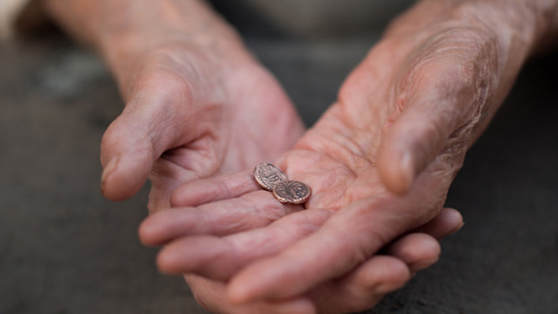
        In Mark 12, Jesus commends a widow for her gift of two small copper coins, worth less than a penny. He reminds His disciples that it is not the size of the gift but rather the size of the sacrifice by saying, “I tell you the truth, this poor widow has put more into the offering box than all the others. For they all gave out of their wealth. But she, out of her poverty, put in what she had to live on, everything she had.”(Mark 12:43-44)

        If a church who has less than $5,000 in annual offerings and worships in a building without running water can impact the world by giving to the Cooperative Program, then your church can too. If you would like to learn more about how your church can truly share in the worldwide spread of the gospel through the Cooperative program, contact me at michael.cabell@kybaptist.org and I would be elated to help.

        KBC Partners With Your Theological Education

        I met with a pastor recently who shared his testimony of working as a barber when the Lord called him to ministry. He knew he needed theological education but was unsure how he would pay for it. He had just purchased a car and knew he could not afford both tuition and a car payment. Determined to receive ministerial training, he returned to the local car lot that sold him the vehicle to ask if they would consider buying the car back. Upon hearing his story, not only did the salesman allow him to return the car, but let him borrow a car to drive back and forth to school. Additionally, this generous businessman contributed money each semester to help pay for his tuition. The pastor revealed there was no way he could have attended Bible college had it not been for a faithful Christian car salesman who came alongside him to support his theological education.

        Like that car salesman, the Kentucky Baptist Convention desires to come alongside current and future Kentucky Baptist ministers to help them in their pursuit of theological education. We exist to serve Kentucky Baptist churches and one way we do that is by investing in the theological education of the current and future ministers of Kentucky Baptist churches.

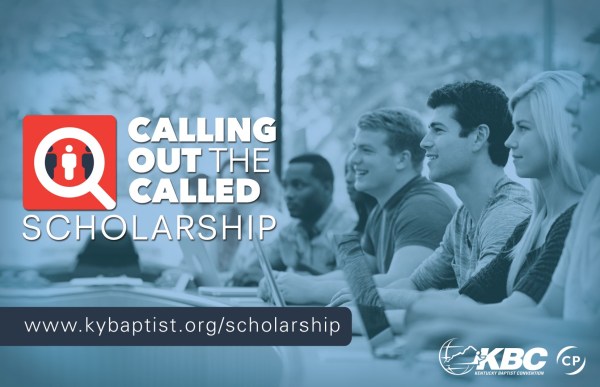
        This year we are excited to launch the Calling Out the Called Scholarship program which will provide $100,000 a year in tuition assistance for Kentucky Baptists attending one of our great in-state institutions — Clear Creek Baptist Bible College, Southern Baptist Theological Seminary and Boyce College.

        Since the majority of KBC churches are led by bivocational pastors, and for some of them attending college or seminary full-time is not feasible, the scholarship is open to both part-time and full-time students. This allowance is a unique blessing for part-time students who traditionally have fewer scholarship options.  

        Students are eligible for up to $1,200 a year in scholarship funds that are managed by the KBC Scholarship Committee.

        To qualify, applicants must be:

        • A resident of KY who is a member of a cooperating KBC church
        • Called to ministry and pursuing a ministry-based bachelor or masters degree at CCBBC, Boyce or SBTS
        • Intend to serve as a minister or missionary in an SBC context

        To apply, current or future students should visit kybaptist.org/scholarship to submit an electronic application that takes just five minutes to complete.

        If you are called to ministry and desire theological education, we want you to know that you are not in this journey alone. The KBC desires to invest in your development by easing some of the burden you may experience paying for Bible College or Seminary.

        The Kentucky Baptist Convention celebrates the opportunity to serve churches by helping develop current and future ministers. Yet another example of why we are truly #BetterTogether.

        This Thanksgiving I am Thankful for the Cooperative Program

        “Before we eat our Thanksgiving meal, let’s go around the room and have everyone share something they are thankful for.”

        That request is enough to test the self-control of the most disciplined of individuals. While people smile politely on the outside, many of them are groaning on the inside as they endure a level of restraint uncommon to many Americans. With a delicious meal before them, an aroma that beckons the senses, and food that looks like it came from the set of the Food Network, the last thing some hungry family members want is to undergo the “Thanksgiving Tribulation”. In an attempt to hurry it along before the gravy cools, most family members announce the first thing that comes to their mind, often repeating what the person beside them just said.

        This year, however, I am prepared for that question when it comes.

        This Thanksgiving I am thankful for the Cooperative Program.

        I say that not because I am a beneficiary of it, but because my position has provided a unique vantage point of the powerful ministry that is happening because of this amazing missions collaboration. 

        Here are just a few reasons why this Thanksgiving we can be thankful for what is happening because of the SBC Cooperative Program:

        • Nearly 3,600 International Mission Board missionaries reported 176,795 new believers and 22,774 new churches started in just the past year.
        • NAMB church planters have started 9,200 churches in the US and Canada since 2010.
        • Through Sunrise Children’s Services, Kentucky Baptists are caring for approximately 750 foster children and have completed 50 adoptions this year.
        • Kentucky Baptists have served more than 900 Afghan refugees who resettled across our state this year. Churches were able to utilize Global Hunger funds to provide food to more than 550 Afghans during their first three months in Kentucky.
        • Kentucky Baptist Disaster Relief has served hundreds of people, provided thousands of meals, and had 486 gospel conversations with 83 professions of faith as they ministered to victims of the tornado and flood. The development of KY C.A.R.E (Churches Assisting Rebuild Efforts) has provided grants to pastors and churches affected by natural disasters.
        • Kentucky Baptist Campus Ministries have a presence on 28 campuses across the state where in the last year they have witnessed 63 professions of faith.
        • Nearly 20,000 students attended Crossings Camps where over 900 of them were saved.
        • This year our six SBC seminaries graduated 861 Master of Divinity students which will provide more missionaries, pastors, worship ministers, and other leaders sent out to serve our churches.

        There are thousands of new believers all across the world worshipping Jesus today because you and your church gave through the KBC to the SBC Cooperative Program. I am thankful for the many Kentucky Baptist Churches who believe we are better together by jointly supporting mission endeavors.

        With a celebration like that, there is no reason to sweat what you will say when Aunt Beverly calls on you to share a Thanksgiving praise.

        A warning though… if you start sharing ALL that the Cooperative Program does, just be prepared for the mashed potatoes to get cold.

        Five Takeaways From Attending The SBC Executive Committee Meeting

        (Photo Credit: Baptist Press)

        The SBC Executive Committee convened in Nashville this week and I was fortunate to be in attendance with two colleagues from the Kentucky Baptist Convention. This was my first full SBC Executive Committee meeting and being present to observe allowed me to gain a greater understanding of how our convention handles business, interact with convention and entity leaders, and receive information to share with Kentucky Baptist churches.

        Here are five takeaways from my experience with the SBC Executive Committee:

        Southern Baptist Representation

        The 86 members of the Executive Committee are a representative group of Southern Baptists. Nominated by the Committee on Nominations and elected by messengers at the annual meeting, this group is diversified geographically to represent all areas of our country. Since the SBC is not just a convention of pastors, at least one-third of the Executive Committee members must be non-ministers. This means approximately 30 of the members are teachers, bankers, nurses, lawyers, and homemakers. This unique setup ensures that people in our local church pews have significant leadership within our national convention. The size of the churches they represent varies and some may be surprised to learn that neither the current SBC President nor the EC Chairperson are mega-church pastors. Additionally, 26 of the current Executive Committee members are women or minorities. The SBC has grown in its diversity over the past several years and the makeup of the Executive Committee helps represent those trends. While there are some very talented and professional people on the SBC EC, it is not a committee of “elites” but rather a collection of people to which most Southern Baptists can relate.

        It is a New Day for the Executive Committee

        This group has been at the epicenter of some of the most difficult days in the history of the SBC. Much of the criticism was warranted but positive steps are being made. The comments this week were certainly sensitive to the issues Southern Baptists face as they are taking their job of sexual abuse response and financial stewardship seriously. The Abuse Response Implementation Task Force has begun its work and a new Caring Well Sunday was added to the annual SBC calendar to keep sexual abuse response forever on our minds. The meeting contained an appropriate level of remorse and resolve to keep children safe.

        From all accounts I heard, the Executive Committee meeting felt different this time. There are certainly challenges before the committee, but the room contained a spirit of cooperation and hope for the future. I have been impressed with Interim President/CEO Willie McLaurin’s transparent and unifying leadership. I am thankful to have faithful Kentucky Baptists Nick Sandefur, John Lucas, Charles Frazier, and Marcella Crenshaw representing our state as important decisions are being made.

        Cooperative Program Giving is Growing

        Despite the painful past two years in Southern Baptist life, giving to the financial fuel for our mission work continues to grow. Nationwide SBC Cooperative Program giving for the fiscal year ending this month is projected to eclipse $200 million. This is the largest amount since 2008.

        Additionally, special gifts of over $1 million were presented at the meeting. Lifeway delivered over $513,000 in mission offerings from their summer camps to support IMB and NAMB missionaries. The Southern Baptist Convention of Ohio presented the Executive Committee with a check for $500,000 for CP as proceeds from the sale of their Seneca Lake Baptist Camp.

        The SBC is Becoming More Diverse

        EC staff shared that 22.3% of our convention churches and 62% of churches planted during the pandemic are racially and ethnically diverse. There are presently over 3,200 Hispanic churches and 2,000 Asian churches representing 30 nationalities. Almost 1/3 of the members of the recently appointed Committee on Committees are minorities. There is hope this will strengthen diversity within our SBC leadership.

        The SBC Executive Committee Needs Our Prayers

        Major issues are at hand such as the search for a new SBC EC President/CEO and helping to make the SBC a place where no sex abuser can ever hide again. Making sound financial decisions, carrying out the desires of the messengers, and communicating well to churches are paramount during this time of transition.

        Will you please join me in prayer for all 86 of our Executive Committee members and the 30 Executive Committee employees?

        3 things that make Oneida Baptist Institute great

        Last week, hundreds of elementary, middle, and high school students began a new school year at the Oneida Baptist Institute. I had the honor of preaching at the staff worship service as this team of dedicated servants prepared for the year to begin. As I participated in the service, I was reminded of three things that make Oneida Baptist Institute great.  

        Oneida’s Mission Makes It Great

        In 1900, James Anderson Burns opened a school in Oneida to bring Christian education to the mountains of Eastern Kentucky. The school’s mission statement later became “Education for Time and Eternity,” communicating the idea that they exist not just to educate students but to point them toward the giver of everlasting life. For over a century, OBI has taught countless numbers of boys and girls what it means to be a follower of Christ. While many students come from the local community, others are boarding students who come from across the state, nation, and world to attend Oneida Baptist Institute. These students receive a quality education, attend daily chapel services, and learn responsibility by working a job on campus. Students’ lives are being transformed because of the ministry of Oneida Baptist Institute.

        Oneida’s Staff Makes It Great

        The faculty and staff of Oneida Baptist Institute are truly missionaries in the mountains. A man named Ricky shared a testimony that several years ago he spent his vacation volunteering at OBI. Before the conclusion of the two weeks, the Lord called him to serve full-time at OBI. Like Ricky, every staff member has been called to this mission field. They range from long-term faithful servants like Denise Spender, who received recognition for 30 years of service to couples like Jacob and Anna who were experiencing their first day on the job. The entire staff is encouraged by the strong and humble leadership of President Larry Gritton. He is a special leader who frequently applauds the sacrifice and faithfulness of the people who make OBI a special place.

        Oneida’s Donors Make It Great

        During their opening worship service, a designated prayer time was held for friends and donors of the school. Since Martha Hogg’s gift in 1899 of 10 acres of land to build the school upon, God has used donors to play an important role in the life of OBI. Some gifts are small. One precious lady gave multiple times over a series of years and her gifts totaled less than a dollar. Other gifts are very large, like the former student who donated millions of dollars to construct a new dormitory. Still, every donor is equally celebrated. The faithfulness of its donors has allowed OBI to remain a bright light in the darkest of times.

        Oneida Baptist Institute’s largest donor is the Kentucky Baptist Convention, giving over $7.5 million in Cooperative Program dollars to OBI in the past 20 years. Generous donors like the KBC have enabled local students to pay less tuition today ($0) than they did in 1900 ($1 a month). When your Kentucky Baptist church gives to the Cooperative Program you are helping provide Christian education to mountain children and boarding students at Oneida Baptist Institute.

        With a great mission, dedicated staff, and generous volunteers, the Oneida Baptist Institute is a shining star of our cooperative work as Kentucky Baptists. Thousands of students whose lives have been transformed at the Oneida Baptist Institute would testify that we are #BetterTogether.

        Blog at WordPress.com.

        Up ↑