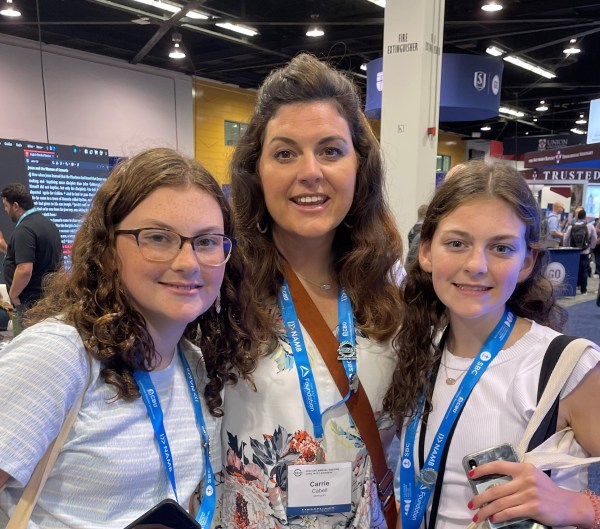
We are the Kentucky. Baptist. Convention.

Hanging in our home are custom picture frames for each member of our family that tell when they were born and the meaning of their name. Guests who study the portraits can quickly become acquainted with “Free & Strong”, “Who is like God?”, “Gift of God” and …. “Helmet Head” (Sorry, Kennedy!).

While it may not be true about my family, the names given to many in the Bible are very important. Their names were often significant and indicated key attributes about the person.

As we approach the annual meeting, I pondered, “What does our name say about the Kentucky Baptist Convention?”

KENTUCKY: We are connected geographically.

Our churches share the common bond of being in Kentucky and being called to reach Kentucky. We are the largest religious group in our state, spanning the entire commonwealth from the Appalachian Mountains in the east to the Jackson Purchase in the west. Our geographical connection isn’t just about sharing a state. It means we understand the diverse needs, varied cultures, and unique challenges encountered across Kentucky. Our shared geographic identity enables us to coordinate efforts to reach every corner of our state with the gospel.

BAPTIST: We are connected theologically.

While there are many churches of various mindsets in our state, what differentiates us is our shared theological conviction. We are united by our core beliefs as expressed in the Baptist Faith and Message, including the authority of the Bible as the infallible Word of God, salvation through Christ alone, the autonomy of the local church, and believers’ baptism by immersion. This shared theological DNA ensures that as we work together, we are aligned in our understanding of God, salvation and the Great Commission. Having a consistent theological framework shapes how we do missions, evangelism and education throughout the state.

CONVENTION: We are connected cooperatively.

The term convention refers to the voluntary cooperation among Kentucky Baptist churches. Unlike hierarchical denominations, Kentucky Baptists are autonomous and not directed by any external authority. Rather, we freely associate with one another for the purpose of fulfilling the Great Commission. This is expressed most tangibly by giving to the Cooperative Program and working collaboratively to launch statewide initiatives, support missionaries, care for foster children, fund collegiate ministry and train future church leaders.

Summary

The Kentucky Baptist Convention is a collection of churches in Kentucky that share a similar Baptist theology and are committed to voluntarily cooperating in ministry through a Convention of churches. Names matter… and “Kentucky Baptist Convention” is one name I am proud of.  

Celebrating the Cooperative Program with Children (includes downloadable lessons!)

Sitting in the front row of a recent church service gave me a direct view of a pastor sharing his weekly children’s message. He immediately captured their attention by distributing currency and sharing that every time a dollar is placed into the church’s offering plate, 20 cents is sent to support missionaries through the Cooperative Program. He personally shared how he and his wife benefited from those gifts while serving as International Mission Board missionaries in South Africa.

Funding missions cooperatively is a hallmark of Southern Baptist churches. But here’s a question worth asking: Do the children in your church know that?

Children learn what their church values from where they see its attention focused. When we intentionally emphasize cooperation, missions, and generosity, we’re shaping their understanding of what it means to be a church. The Cooperative Program is a picture of Kingdom teamwork, showing that we can accomplish far more together than we could ever do alone.

When children grow up understanding and appreciating the Cooperative Program, they become adults who lead missionally, laypeople who give generously, pastors who prioritize partnership, and missionaries who know churches stand behind them.

After all, the next generation of missionaries, pastors, and church leaders is already sitting in your Sunday School rooms. Let’s help them grow up understanding the beauty of cooperation.

Downloadable Cooperative Program Children’s Lessons

Teaching children about the Cooperative Program can be woven naturally into what you’re already doing. Below are links to children’s lessons and resources suitable for use in Sunday School, during Kids’ Worship, or for a special missions event.

Free Cooperative Program “Better Together” Children’s Lesson and necessary Lesson Resources

Free Children’s Cooperative Program Activity Books

WMU Children’s Lesson “Cooperative Program: How Southern Baptists Work Together”

25 Ways to Celebrate the 100th Anniversary of the Cooperative Program in ’25

In 2012, the Boston Red Sox celebrated the 100th anniversary of Fenway Park, the oldest active Major Leage Baseball stadium in the United States. Fans wore birthday hats and special lanyards to commemorate the centennial. The celebration was packed with nostalgic tributes and the return of legendary players to the field. Caroline Kennedy threw out the ceremonial first pitch as a nod to her great-grandfather Honey Fitz who threw Fenway’s first pitch 100 years earlier. As exciting as that was, the largest cheers went to Fenway’s “Green Monster”, the iconic left field wall that symbolizes the character of the stadium in a sea of newly constructed futuristic venues.

Before the game began, Red Sox great Pedro Martinez led the crowd in toasting Welch’s grape juice to the stadium. When finished, the 100th birthday celebration for Fenway Park set a new Guinness World Record for “largest toast at a single venue” with 32,904 people.

As beloved as Fenway Park is, in 2025, Southern Baptists have a 100th anniversary celebration of far greater importance. Adopted by Southern Baptists in 1925, the Cooperative Program has resulted in millions of people coming to know Christ over the last century. The 100th anniversary provides a powerful opportunity to share about the biblical principle of cooperation and celebrate the impact of what your church is doing in cooperation with 47,000 other Southern Baptist Churches.

Here are twenty-five ways your church can celebrate the centennial of the Cooperative Program in 2025:

  1. Provide a mission moment in each service before the offering. Saying something like, “As we take up the offering today, know that a percentage of what you contribute is given in cooperation with other Southern Baptist churches to support 3,561 international missionaries around the world.” A complete list of CP impact statements is available here.
  2. Invite someone from your state convention to preach a sermon on cooperative missions.
  3. Invite a Cooperative Program supported missionary to give a testimony of the work facilitated by your church’s partnership.
  4. Adopt a resolution on cooperation in your church business/members meeting. Here is an example resolution that can be tailored to fit your church.
  5. Increase your Cooperative Program Giving. The 100th Anniversary is an ideal time to lead your church to increase its giving. Some may move to 10% of undesignated receipts, while others may increase by 1% of their overall budget. What a celebration it would be to make your 2025 contribution to the Cooperative Program your church’s largest.
  6. Schedule a state convention staff member to share with your church a presentation titled “Better Together: Understanding and Celebrating the Cooperative Program.” This presentation is excellent for Sunday nights, Wednesday nights, or small group meetings.
  7. Each month, share a video during the worship service highlighting the impact of your cooperative giving. Abundant video resources are available here.
  8. Utilize CP promotional items to use as bulletin inserts. You can order free copies of these resources here.
  9. Invite a member of your state convention staff to share the history and impact of the Cooperative Program in your ministerial staff meeting or with your Finance or Missions Committee.
  10. Pass out cupcakes after the May 18th worship service to celebrate the Cooperative Program’s 100th birthday earlier that week.
  11. Attend the Kentucky Baptist Convention’s Cooperative Program 100th Anniversary Celebration at First Baptist Church in Murray, KY on Monday evening, May 5th. All Kentucky Baptists are invited to gather at the birthplace of the Cooperative Program for a celebration banquet.
  12. Host a Cooperative Program Missions Weekend with speakers from entities you support through the Cooperative Program.
  13. Participate in a Cooperative Program Tour. In September, Kentucky Baptists are invited to participate in a one-day tour of four ministries supported by your giving.
  14. Take up a special centennial offering for the Cooperative Program.
  15. Host a special prayer vigil to pray for our Southern Baptist missionaries.
  16. Cooperative Program Missions Fair with booths from the entities supported by your church’s Cooperative Program giving.
  17. Attend the 2025 Southern Baptist Convention Annual Meeting and celebrate this anniversary with thousands of other Southern Baptists. This year’s annual meeting is in Dallas, Texas, on June 10th and 11th.
  18. Simulcast the SBC 100th Anniversary Celebration. The Cooperative Program was adopted on May 13, 1925, during the Southern Baptist Convention Annual Meeting at the Ellis Auditorium in Memphis, TN. Southern Baptist leaders will meet on the same plot of ground in Memphis, TN, 100 years to the day, May 13, 2025, to celebrate the centennial and sign a ceremonial resolution on cooperation.
  19. The SBC’s “52 Sundays” is a weekly resource that shares about a missionary your church supports. Post these weekly on your social media accounts.
  20. Share a testimony with your church about how the Cooperative Program has impacted you personally.
  21. Celebrate Cooperative Program Month in October
  22. Use a visual such as paper clips or beads to show the amount of dollars your church has given to the Cooperative Program in its lifetime. Your state convention can provide that information to you.
  23. Host a Missions Banquet with speakers and videos celebrating the church’s investment in the Cooperative Program. Your state convention can help connect you with missionaries to share.
  24. Take a mission trip with a Cooperative Program funded missionary or entity.
  25. Sign up to be a CP Champion and commit to pray and share about our cooperative work.

What celebration ideas would you add to this list?

5 Reasons Why Your Church Should Celebrate the 100th Anniversary of the Cooperative Program in 2025

Several years ago, my family gathered to celebrate my maternal grandfather’s 100th birthday. It was an incredible milestone, especially for a Kentucky farmer who survived on hard work, biscuits and gravy, and pork sausage. His birthday party was a wonderful celebration of his life and an opportunity to admire his impact. Beginning with their twelve children, over 100 people had descended from him and my grandmother by his 100th birthday.

While not many get to experience a loved one’s 100th birthday party, in 2025, you have an incredible opportunity to celebrate the 100th birthday of the Cooperative Program. Adopted by Southern Baptists in 1925, giving to missions through the Cooperative Program has resulted in millions of people coming to know Christ over the last century. While there will be national and statewide celebrations, here are five reasons why I encourage your church to celebrate the centennial of our cooperative work in 2025:

  1. Recognizes Your Church’s Kingdom Impact

    Giving through the Cooperative Program each year results in hundreds of churches planted, thousands of missionaries on the field, tens of thousands of students receiving theological education and hundreds of thousands of salvations worldwide. Your church’s missional investment helps to make this gospel ministry possible. How great it will be for your church to celebrate the impact they are having across their state and around the world.!

    1. Communicates Your Church Is Part of a Larger Faith Family

        The Cooperative Program is the strategy by which 47,000 Southern Baptist churches voluntarily work together to fund missions and ministry around the globe. In an era where individualism abounds, celebrating this anniversary demonstrates the value your church puts on cooperating with like-minded churches. I recently heard an associational mission strategist say, “I am Baptist because of Scriptural convictions and Southern Baptist because of Scriptural cooperation.” Just as church members are a part of the body of Christ, individual churches are part of a family of churches working together worldwide.

        1. Encourages the Congregation to Give Faithfully to Your Church

        Funding missions through the Cooperative Program begins with church members giving to your church. In the same way that a state convention thanks a church for faithfully giving to support missions, it is incumbent on the church to thank its members for their faithful giving to their local congregation. Members are even more encouraged to give to your church when realizing a portion of their offering will fund Baptist collegiate ministries, foster care, church planters, international missionaries, disaster relief and much more.

        1. Honors the Devotion of Previous Generations

        The Cooperative Program has endured 100 years because many Southern Baptist churches have sacrificed to maintain their commitment despite the Great Depression, World War II, the 2008 Financial Crisis and much more. Had they wavered in their commitment, our missionary force would be smaller, our seminaries would be fewer, and our churches would be weaker. Celebrating this centennial is an opportunity to thank committed church members while challenging younger Christians to adopt the commitment level of previous generations.

        1. Glorifies God for His Work Through Our Convention of Churches

        The only reason a mission funding program reliant on voluntary cooperation has thrived for 100 years is God’s hand upon our work. Celebrating the Cooperative Program’s centennial anniversary provides an opportunity to praise the Lord for His greatness.

        So, throw a party to celebrate the Cooperative Program’s 100th birthday in 2025! Consider recognizing this important event by inviting a state convention staff member to preach on Biblical cooperation, asking a CP-funded missionary to give a testimony, or doing a mission fair that highlights the impact of your giving. Check out my upcoming article or email me at Michael.Cabell@kybaptist.org for ideas and resources.

        After Visiting the International Mission Board, Here are Six Things I Love About It… and One Thing I Do Not

        I recently led a group of Kentucky Baptists to the International Mission Board training center and offices in Richmond, Virginia, to gain a better understanding of the impact of our Cooperative Program. After this excellent three-day experience, I recognized six things I love about the IMB… and one thing I did not.  

        1. IMB missionaries are sent by churches.

        While the IMB assesses, trains, and cares for missionaries, one thing is abundantly clear: Churches send missionaries. Very early in the application process, the sending church pastor is interviewed, and the church body must endorse the candidate before they can proceed past the first phase. Before being commissioned, their pastor is invited to attend the “Sending Together” seminar to solidify the church’s partnership in this task.

        2. IMB missionaries know the mission.

        The mission board recognizes that their chief goal is to send a physical missionary presence to the people and places of the world where God is not yet known or named. Through their six-step missionary task, they seek to fulfill the Biblical description in Revelation 7:9 of a multitude in heaven representative of every people group in the world. President Paul Chitwood has done an exemplary job leading the organization to be laser focused on this calling.

        3. IMB missionaries are accountable to Southern Baptists.

        All 3,600 missionaries are endorsed by a Southern Baptist Church, fully agree with the Baptist Faith and Message, and are only appointed following a thorough review by a Board of Trustees elected by Southern Baptist Messengers. Their work is monitored for maximum effectiveness and each expense is scrutinized by a financial department to ensure every penny spent aligns with the missionary task.

        4. IMB missionaries undergo a stringent assessment process.

        After sending missionaries for 180 years, the IMB recognizes characteristics that lead to the greatest likelihood of assimilation on the mission field. The robust assessment process covers educational readiness, physical and mental wellness, consistency as a gospel witness, and more. Southern Baptists can be confident that the very best missionaries are being placed on the field. While lengthy, the assessment process enables IMB missionaries to have an incredibly low attrition rate.

        5. IMB missionaries are strategically placed.

        An entire department is tasked with researching people groups worldwide to determine where they are and if they have a gospel witness. IMB missionaries are sent to unreached people groups where less than 2% of the population are Christian, and to unreached unengaged people groups who are not known to have any gospel witness among them. This may mean there are some areas where missionaries are not sent because there is already a mass of believers sufficient to spread the gospel among their people. The strategy utilized ensures our Southern Baptist missionaries are going to the spiritually darkest places in all of humanity.

        6. IMB missionaries are supported.

        As a result of the faithfulness of Southern Baptist churches, our missionaries are fully funded. In addition to a salary, housing, and education, their children receive specialized education to prepare them for living cross-country, risk management personnel keep a close eye on their safety, and a logistics department provides all needs, from visas to airfare.

        And the one thing I do not like….

        In a denomination that loves its acronyms… the IMB is king. 😊

        I say this completely in jest, as even IMB personnel and trustees make light of it.

        Suffice it to say, I hope one day you will visit the IMB’s ILC supported by CP and LMCO to send M’s to NAME and EAPR after they have completed FPO and CERC for the TCKs.

        Southern Baptists have a treasure in the International Mission Board, and it is one of the great examples of why we are better together.

        Is It Best To Fund Missionaries Independently or Cooperatively?

        All Christians share in the call of Acts 1:8 to evangelize their city, state, nation and world while churches employ diverse strategies to support missionaries in each of these fields. Since 1925, Southern Baptists have sponsored missionaries in a unique way – partnering together with voluntary contributions to the Cooperative Program that are used to advance the gospel by funding missionaries and other kingdom mission work. While we celebrate the wonderful work of independent missionaries and parachurch organizations, the way Southern Baptists cooperatively fund missions has proven to be superior for at least four reasons.

        Staying Power

        A pastor recently shared with me about his time as an independent missionary and the sorrow he felt when he had to leave the mission field prematurely. He made frequent trips to his home state for months at a time to solicit financial support, but eventually, many pastors changed positions, churches adjusted their budgets, and key supporters passed away. The independent missionary was forced to leave the mission field not because of the loss of God’s call, but because of the loss of fundraising dollars. He was unable to independently raise enough money to continue his important mission work.

        This pastor’s experience is not unique. A survey completed by 15,087 missionaries discovered that 43% were unable to fulfill their long-term commitment to the mission field.[i] The Association of Baptists for World Evangelism stated, “The single greatest reason that these missionaries returned wasn’t a disqualifying sin or a health problem. It was lack of funding. The single reason most missionaries don’t last on the field is because they aren’t able to sustain their support.”[ii]

        While this is the case with independent missionaries or those sent by organizations with a “raise your own support” model, the Cooperative Program ensures Southern Baptist missionaries do not face the same plight. The SBC’s over 3,600 international missionaries are fully funded, receive ongoing training, and are cared for physically, emotionally and spiritually while on the field. While 43% of independent missionaries leave the mission field prematurely, only 7% of Southern Baptist IMB missionaries are unable to complete their term of service. When you support missionaries through the Cooperative Program, they are six times more likely to remain on the field than their independent counterparts.

        Single Priority

        Southern Baptists send missionaries to the field with the primary assignment of sharing the gospel with unreached and unengaged people groups. The ability to focus singularly on this task resulted in 728,589 gospel conversations and over 178,177 people led to Christ in 2022.[iii]

        Our independent missionary brothers and sisters do not have such a privilege. Added to the call of sharing Jesus is the pressing responsibility of communicating with donors, sending request letters, making social media posts, writing newsletter articles and demonstrating the fruit of their labors to garner support for their important work. For many, this requires regularly leaving their mission field to seek additional funds from churches and individuals. One independent missionary I spoke with was in the midst of a 3-month trip to the U.S. he takes every two years to speak in as many churches as possible. He hates that raising support takes him away from the mission field, but he sees no better option for an independent missionary. Another missionary, who served in the Far East with a U.S.-based parachurch organization, shared he was envious of SBC missionaries because 25% of his time was spent not on sharing the gospel, but on raising money so he could stay on the field.

        Some outstanding missionaries are not skilled fundraisers, and some accomplished fundraisers may be ineffective missionaries. Funding missionaries through the Cooperative Program allows those sent by Southern Baptists to be singularly focused on telling people about Jesus.

        Strategic Placement

        Imagine attending a fried chicken church potluck where participants bring whatever side they want. You would be quite surprised (and likely disappointed) if the buffet table contained seven crockpots of green beans and only one bowl of mashed potatoes. When everyone provides their own dish without an overall plan coordinated with others, there is the possibility of a lot of one dish and a shortage of another.

        If our approach to missions is for every church to function independently, it could result in them all serving green beans and no one providing mashed potatoes. Mission fields that are easy to access, speak a common language, and are not under government persecution stand to receive more missionaries and financial support. One blog writer compared independent missions funding to a “beauty pageant” where individuals and churches are tempted to support the most compelling speaker with heartwarming pictures.

        Where does that leave the missionary called to an unengaged people group in a hard-to-reach place where publicly acknowledging Jesus could lead to death? The task of learning the culture, translating the Bible, and earning the trust of the people will take years. Returning to the U.S. frequently to secure donors could raise suspicion among the people served. Who is going to support that missionary during the decade it takes to make inroads with this group of people with no gospel witness? The answer is Southern Baptists, and the reason is the Cooperative Program. 

        Partnering to support missions through the Cooperative Program fuels a prayerful and strategic distribution of missionaries to the spiritually darkest parts of our world.

        Stewardship Protection

        Missionaries supported by the SBC Cooperative Program are fully funded with a place to live, medical care for their family, transportation, and ministry supplies for sharing the gospel. This will cost far less for missionaries in Cairo than it does for missionaries in Dubai. Funding missionaries through the Cooperative Program ensures an equitable distribution of resources so that each missionary has a comparable standard of living. What costs $20,000 in Egypt may cost $80,000 in the United Arab Emirates. However, there is not an added fundraising burden placed on the missionary who is serving in a country with a higher cost of living.

        Giving through the Cooperative Program not only ensures equitable treatment, but it protects the church’s investment. I recently heard of a church directly supporting an independent missionary until learning the missionary had been off the mission field for four years without notifying the church. The structure of the SBC eliminates the need for individual churches to monitor the status of each missionary they support and instead delegates that responsibility to trusted leaders who have continual contact on the field with the missionaries. This helps churches know their missionaries are preaching the gospel, are actively serving and are effective in their work. In short, churches that use the Cooperative Program as their missions-giving strategy can be confident their resources are being used appropriately.

        A common argument for independently funding missionaries is that it prevents money from being used as overhead. But does it? Independent missionaries certainly have overhead expenses in sending newsletters, receiving contributions, issuing tax statements, travel expenses to solicit support and much more. Additionally, contributions that are used for their salary during the months they are away from the field to fundraise is overhead. Missionaries that go through parachurch organizations often have a portion of the funds they raise retained by the organization to cover overhead. This is in addition to the time and money spent by the missionary in seeking donors who contribute on their behalf to the parachurch organization.

        Southern Baptists believe there is greater financial efficiency in centralizing overhead costs for all missionaries instead of each missionary independently funding their own, often leading to a duplication of efforts.

        Conclusion

        Regardless of the way they are funded, every Christian should celebrate the sending of more missionaries to unreached people groups. Doing so through the Cooperative Program results in missionaries staying on the field longer, allows them to singularly focus on sharing the gospel, utilizes a strategic approach to send them to unreached people groups, and ensures the church’s investment is being used as it should. The result is a beautiful partnership that allows churches to do far more together than we could ever do apart. If you would like more information on the Cooperative Program, visit kybaptist.org/cp or sbc.net/cp.


        [i] https://www.worldevangelicals.org/resources/rfiles/res3_95_link_1292358708.pdf

        [ii] https://abwe.org/blog/single-reason-most-missionaries-don-t-last-field-and-how-fix-it/

        [iii] https://www.imb.org/wp-content/uploads/2023/05/ASR-2023-web.pdf
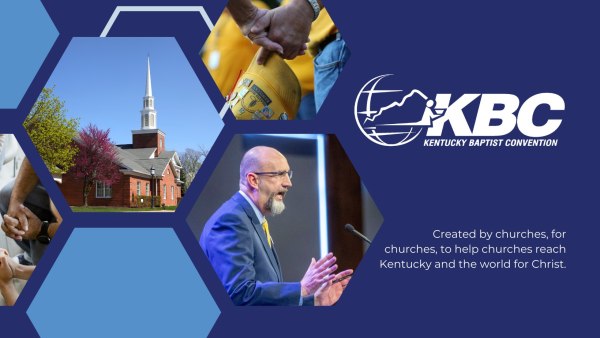
        4 reasons to take your teens to the Southern Baptist Convention Annual Meeting

        The blessing of attending this year’s SBC Annual Meeting was made even more special because I had the wonderful opportunity to attend with my wife and children. In the past, I have observed other pastors attending with their families and it encouraged us to involve our teenagers in this year’s gathering.

        It was such a positive experience that I want to share four reasons why I think you should consider bringing your teens to future SBC Annual Meetings:

        1. They Realize They are Not Alone. There is something about entering a convention hall with 10,000+ other Southern Baptists that helps a person realize the magnitude of being part of the largest Protestant denomination in the United States. Teenagers may at times wonder if there is anyone out there who believes like them but attending the SBC Annual Meeting helps remind them there are literally millions of Christians that support evangelical Christian values.

        2. They Gain a Greater Understanding of the Cooperative Program. Hearing celebrations from missionaries, seminaries, church planters, and evangelism initiatives provides the opportunity to see how we are better together when we cooperatively fund ministries. Walking around the exhibition hall allowed my teens to converse with ministry representatives. An IMB missionary talked with my daughters for 20 minutes about future missionary opportunities. Sadly, every day we bury CP champions, and we need to do all we can to raise up a future generation of CP champions.

        3. They Witness the Commissioning of International Missionaries. For me, the highlight of every SBC Annual Meeting is being involved in the commissioning of international missionaries. At this year’s meeting, 52 Christians were sent out by SBC churches through the IMB to help reach people in unreached people groups in some of the world’s most hostile places. Witnessing this moving service will hopefully leave an indelible mark on the lives of teenagers.

        4. They Have an Opportunity to Participate. Southern Baptist polity gives each person an equal right to speak and vote on decisions of our convention. My teenager casting their ballot to vote carries the same power as that of a seminary president casting their ballot. While that may be scary for some, it is a beautiful picture that the Southern Baptist Convention is led by equal messengers and not a hierarchy of power.

        *Bonus – this is not part of my list since my teens have not participated in it, but SBC offers Youth on Mission service opportunities for teens to help the local area. Hopefully, we will be able to check out those opportunities in the future.  Next year’s convention is in New Orleans. I hope to see you— and your family— there!

        Blog at WordPress.com.

        Up ↑